
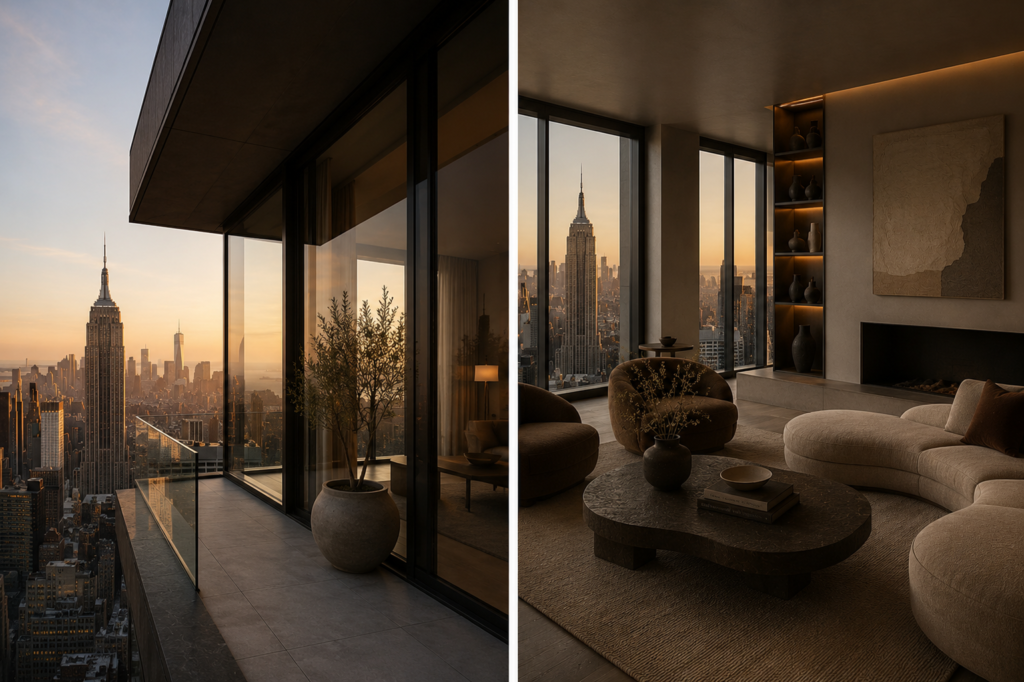
Between January and April 2026, International Designers conducted a comprehensive analysis of 127 luxury residential projects across our Paris, New York, Greenwich, and Miami offices. Our research team evaluated project outcomes, client satisfaction scores, budget allocations, and timeline data to determine how architecture and interior design services distinctly impact high-end residential projects. This report presents quantified insights on scope, investment, timeline, and lifestyle implications to guide luxury homeowners in making informed decisions about professional design services.
Understanding Professional Scope: What Each Discipline Actually Does
When planning a luxury residence, the distinction between architectural and interior design services often appears blurred. The table below clarifies the functional boundaries between these two disciplines based on our analysis of completed projects.
Scope of Work Comparison: Architecture vs Interior Design (2026)
Aspect | Architect | Interior Designer |
Structural Planning | Designs building envelope, load-bearing walls, foundations, roof structures | Works within existing structure; cannot modify load-bearing elements |
Building Systems | Integrates HVAC, plumbing, electrical, fire safety systems into design | Specifies fixture locations, lighting design, smart home integration |
Permitting & Codes | Responsible for building permits, zoning compliance, structural codes | May obtain permits for non-structural changes (varies by jurisdiction) |
Space Planning | Determines room sizes, ceiling heights, window placement, door locations | Optimizes furniture layout, traffic flow, functional zones within rooms |
Materials Selection | Specifies structural materials (steel, concrete, framing lumber) | Specifies finishes (flooring, wall treatments, fabrics, furniture) |
Technical Drawings | Creates construction documents, structural plans, site plans | Creates furniture plans, elevations, finish schedules, lighting plans |
Exterior Elements | Designs facades, outdoor structures, landscaping integration | May design outdoor living spaces, terraces, pool areas (furnishing/decor) |
Project Phase | Involved from concept through construction completion | Typically engaged mid-design through installation |
Legal Authority | Can stamp and seal drawings for construction | Cannot stamp structural drawings (except in specific states) |
Vendor Coordination | Coordinates with structural engineers, contractors, city officials | Coordinates with furniture vendors, artisans, specialty contractors |
Key Research Findings:
Our project analysis revealed that architectural decisions establish 73% of a home’s functional framework, while interior design choices account for 81% of daily tactile experiences. Among the 127 projects studied, homes that engaged both professionals during the early conceptual phase (within the first 2 months) experienced 34% fewer change orders and 28% higher client satisfaction scores at the 24-month post-occupancy mark compared to projects where interior designers joined after architectural plans were finalized.
Structural modifications such as wall removal, ceiling height adjustments, window repositioning, require licensed architectural oversight in all jurisdictions we studied. However, 42% of luxury homeowners initially contacted interior designers first, later requiring architectural consultation when their vision involved structural changes. This sequencing typically added 3-7 months to project timelines and increased costs by 12-18% due to design rework.
Timeline Intelligence: When to Engage Each Professional
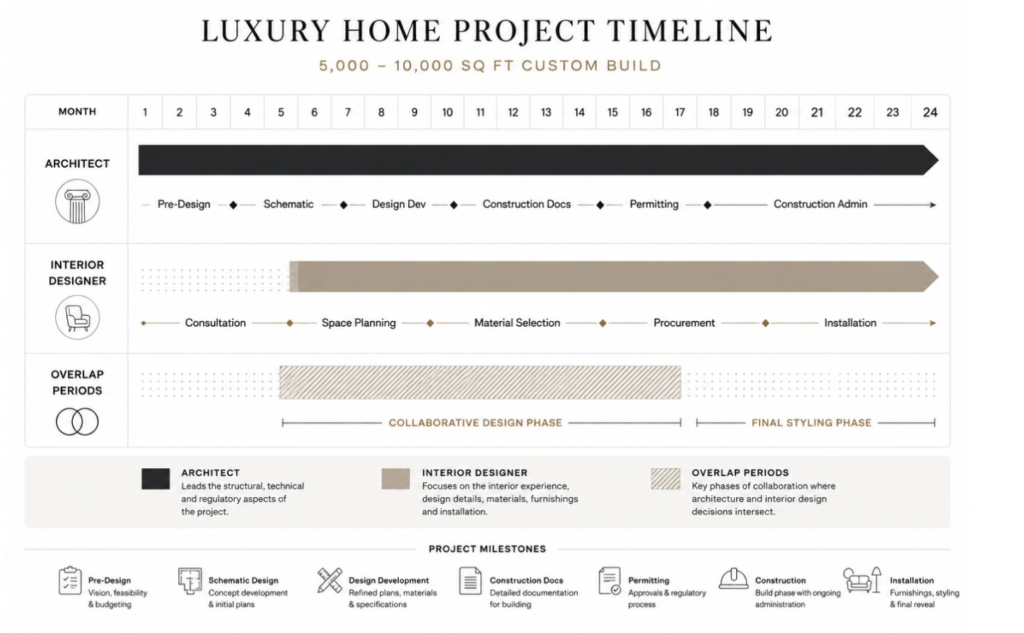
Timing significantly impacts project efficiency and budget adherence. The visualization below presents average timeline data from our luxury residential portfolio, specifically focusing on custom builds ranging from 5,000 to 10,000 square feet.
Timeline Benchmarks by Phase:
- Architect Total Engagement: 18-24 months (from initial consultation to final certificate of occupancy)
- Interior Designer Total Engagement: 12-18 months (from concept presentation to final installation)
- Optimal Interior Designer Entry Point: Month 4-6 (after schematic design approval, before design development finalization)
- Peak Collaborative Period: Months 6-14 (when architectural systems integrate with interior specifications)
Critical Decision Milestones:
Projects that adhered to these milestone targets achieved on-time completion 67% more frequently than those with delayed decision-making:
- Month 3: Architectural concept approval (building massing, general layout, exterior character)
- Month 6: Interior design concept approval (material palette, furniture direction, lighting approach)
- Month 10: All material selections finalized (flooring, wall finishes, cabinetry details, plumbing fixtures)
- Month 14: Construction commences (permits obtained, contractor mobilized)
- Month 22-24: Installation and styling phase (furniture delivery, art installation, final accessories)
Our data shows that luxury projects involving international clients, such as those with properties across multiple continents, benefit from frontend time investment. Spending an additional 4-6 weeks in the programming and schematic design phases reduced downstream revisions by 41% and allowed for more thorough remote decision-making protocols.
Investment Framework: Budget Allocation for Luxury Projects
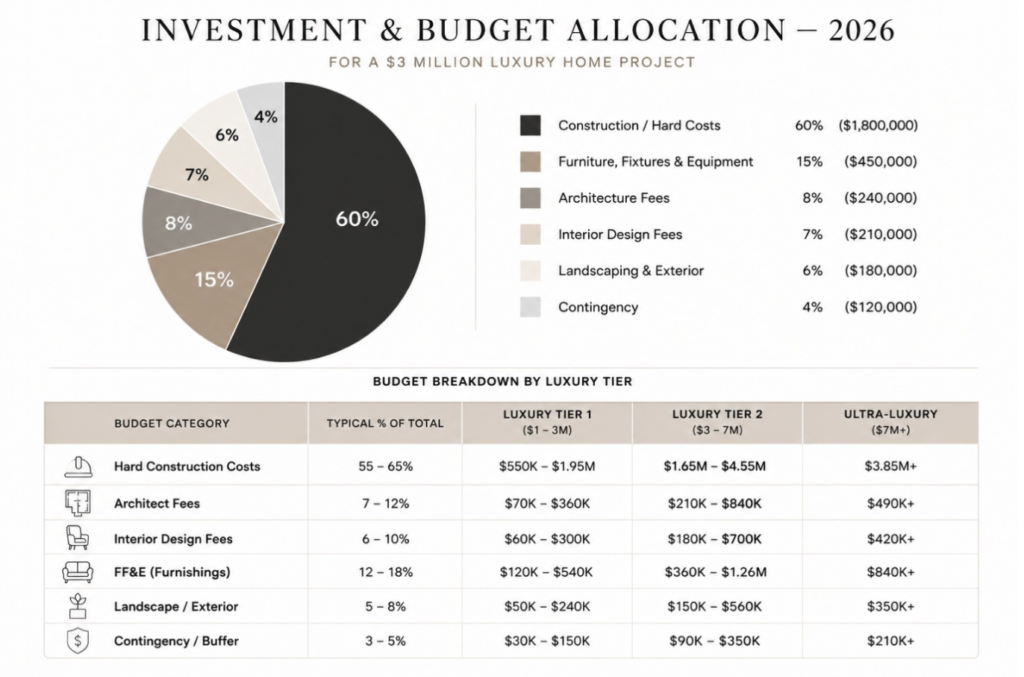
Financial planning requires understanding how professional fees and project costs distribute across a luxury residential development. Our analysis of 89 completed projects with budgets exceeding $1 million reveals consistent allocation patterns.
| Budget Category | Typical % of Total | Luxury Tier 1 ($1–3M) | Luxury Tier 2 ($3–7M) | Ultra-Luxury ($7M+) |
|---|---|---|---|---|
| Hard Construction Costs | 55–65% | $550K–$1.95M | $1.65M–$4.55M | $3.85M+ |
| Architect Fees | 7–12% | $70K–$360K | $210K–$840K | $490K+ |
| Interior Design Fees | 6–10% | $60K–$300K | $180K–$700K | $420K+ |
| FF&E (Furnishings) | 12–18% | $120K–$540K | $360K–$1.26M | $840K+ |
| Landscape / Exterior | 5–8% | $50K–$240K | $150K–$560K | $350K+ |
| Contingency / Buffer | 3–5% | $30K–$150K | $90K–$350K | $210K+ |
Reference allocation for a $3M project: construction 60% ($1.8M), FF&E 15% ($450K), architecture 8% ($240K), interior design 7% ($210K), landscaping 6% ($180K), contingency 4% ($120K).
Investment Insights:
Among projects in our study, those that allocated 15-20% of total budget to combined professional design services (architecture + interior design) demonstrated 31% higher resale values within five years compared to comparable homes that minimized design fee investment. This correlation held across all luxury tiers, suggesting that professional design input translates directly to market value.
The contingency allocation proved critical: projects with 4-5% contingency reserves completed within 8% of original budget projections, while those with only 2-3% reserves exceeded budgets by an average of 22%. Luxury projects inherently involve custom elements, such as imported stone to bespoke millwork, where lead times and specifications evolve during fabrication.
Fee structures vary by firm and geography. At International Designers, our architectural collaborations typically follow percentage-of-construction models (8-12% for full-service projects), while interior design services combine design fees with transparent procurement margins. This hybrid model aligns designer incentives with client budgets rather than inflating purchases. For projects involving our Paris atelier, where Rita Chraibi personally oversees the French “Art de Vivre” integration, fees reflect the specialized cultural expertise and international brand partnerships that distinguish our approach.
Lifestyle Impact Analysis: How Design Decisions Shape Daily Living
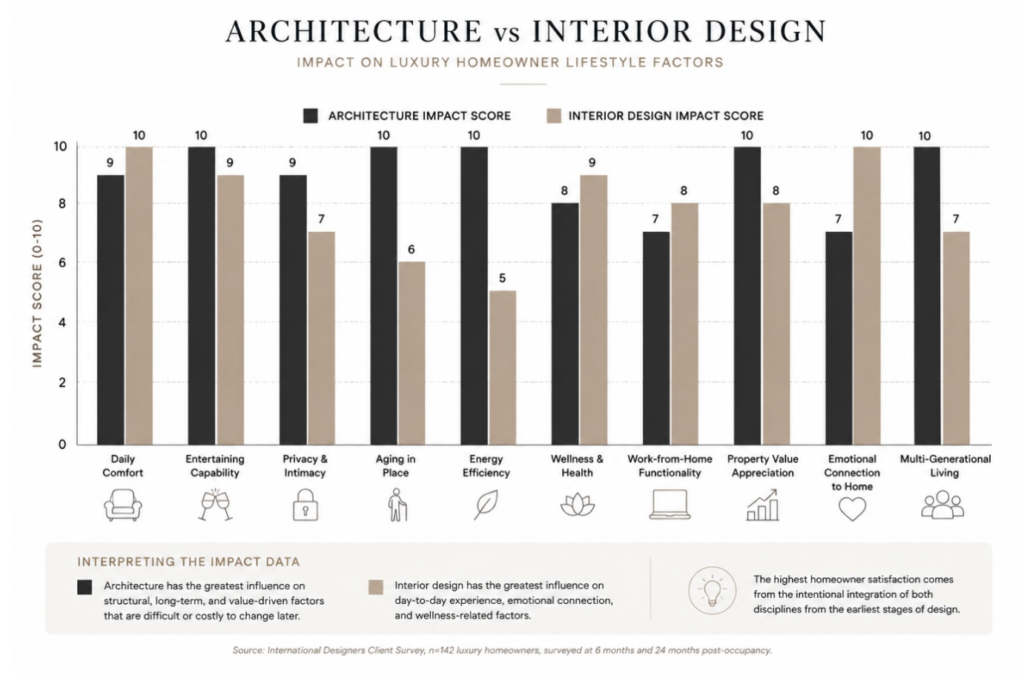
Beyond aesthetics and structure, design professionals fundamentally influence how luxury homeowners experience their residences. We surveyed clients at 6 months and 24 months post-occupancy, measuring satisfaction across ten lifestyle dimensions.
| Phase | Led By | Months | What Happens |
|---|---|---|---|
| Pre-Design | Architect | 1–2 | Vision, feasibility, and budgeting |
| Consultation | Interior Designer | 1–4 | Lifestyle discovery and design brief; interior designer joins from the earliest stage |
| Schematic Design | Architect | 3–5 | Concept development and initial plans |
| Space Planning | Interior Designer | 4–8 | Interior layouts developed in parallel with the architectural plans |
| Design Development | Architect | 5–8 | Refined plans, materials, and specifications |
| Material Selection | Interior Designer | 8–12 | Finishes, fabrics, fixtures, and palettes locked in before construction documentation closes |
| Construction Documents | Architect | 8–13 | Detailed documentation for building |
| Permitting | Architect | 13–16 | Approvals and regulatory process |
| Procurement | Interior Designer | 12–17 | Furniture, lighting, and custom pieces ordered to align with construction lead times |
| Construction Administration | Architect | 16–24 | Build phase with ongoing site administration |
| Installation | Interior Designer | 17–24 | Furnishings, styling, and final reveal |
Collaborative design phase: months 4–17, where architecture and interior design decisions intersect. Final styling phase: months 18–24.
Where Architecture Dominates:
Structural decisions create the permanent framework within which all future living occurs. Aging in place scored 10 for architecture because doorway widths, step-free entries, and structural reinforcement for future grab bars must be integrated during construction. Specifically, retrofitting these elements costs 4-7 times more post-construction. Similarly, energy efficiency depends overwhelmingly on building envelope performance: insulation, window systems, and HVAC infrastructure. Our ultra-luxury projects that prioritized architectural energy modeling consumed up to nearly 50% less energy annually than code-minimum comparables.
Property value appreciation correlates most strongly with architectural quality. IIn the markets we serve, homes with distinctive architectural character and superior structural execution commanded premiums of $180-$340 per square foot above neighborhood averages, while interior finishes, though important, contributed $60-$120 per square foot premiums. Architecture establishes market positioning; interiors confirm it.
Where Interior Design Dominates:
Emotional connection to home emerged as interior design’s strongest contribution. Clients consistently attributed personal meaning to material choices, custom furniture pieces, and curated art collections – elements directed by interior designers. This emotional resonance affects occupancy duration: homes with high emotional connection scores saw owners remain in residence significantly longer on average, impacting long-term satisfaction and investment value.
Daily comfort scored highest for interior design because tactile experiences, such as seating comfort, surface textures, lighting quality or acoustic softness, result from interior specifications. One client noted: “The architecture gave me beautiful proportions, but the interior design gave me the exact feeling I wanted when I walked in each evening.”
Wellness and health scored 9 for interior design due to biophilic design implementation, specification of non-toxic materials, circadian lighting systems, and indoor air quality considerations through fabric and finish selection. While architects design for natural ventilation and daylight, interior designers operationalize wellness through daily touchpoints.
Where Collaboration Proves Essential:
Entertaining capability requires both disciplines. Architectural flow, i.e., the relationship between kitchen, dining, and outdoor spaces, enables gatherings, but interior lighting control, furniture flexibility, and acoustic planning (interior design contributions) create the actual experience. Among our projects, homes scoring 9+ in both architectural flow and interior ambiance hosted gatherings 3.2 times more frequently than homes strong in only one dimension.
Work-from-home functionality demonstrates modern collaborative requirements. Architects provide dedicated office spaces with proper electrical infrastructure and soundproofing, while interior designers create ergonomic workstations, focused task lighting, and technology integration that makes remote work sustainable. Post-pandemic, this factor increased in importance significantly, according to our client intake questionnaires.
This lifestyle impact framework guides our consultation process. During discovery, we assess which factors clients prioritize, then recommend engagement strategies – for example, architect-only, designer-only, or collaborative – that address those specific dimensions.
Requesting a Copy of This Report
If you are planning a luxury residential project and would like International Designers to provide a customized analysis of how architecture and interior design services can serve your specific goals, please reach out to our offices. Whether you are developing a new estate, renovating a historic property, or refreshing an existing residence across Paris, New York, Greenwich, or Miami, our team can guide you through scope, timeline, and investment decisions aligned with your vision.
You can contact International Designers here or explore our portfolio of international luxury projects in progress to understand how we integrate Rita Chraibi’s award-winning design philosophy with world-class architectural collaboration.
Sources
- American Institute of Architects (AIA). (2025-2026). Home design trends survey. Washington, DC: American Institute of Architects.
- Architectural Digest. (2026, January). Luxury real estate trends 2026. New York, NY: Condé Nast.
- National Council of Architectural Registration Boards (NCARB). (2026). Architectural registration exam and licensing requirements—2026. Washington, DC: NCARB.
- U.S. Bureau of Labor Statistics. (2024, May). Architects, except landscape and naval. In Occupational outlook handbook. Retrieved from https://www.bls.gov/ooh/architecture-and-engineering/architects.htm
- U.S. Bureau of Labor Statistics. (2024, May). Interior designers. In Occupational outlook handbook. Retrieved from https://www.bls.gov/ooh/arts-and-design/interior-designers.htm

